
Blog
Staying Active After 60: How SoftWave Helps York Seniors Keep Moving
Staying Active After 60 in York, PA: A Body That Keeps Up With Your Life
There is a special kind of freedom that comes with staying active in your sixties, seventies, and beyond. It is the freedom to tend a garden through a full York summer, to walk the trails at Rocky Ridge County Park, to get down on the floor with grandchildren and, just as importantly, to get back up again. For many older adults, that freedom starts to feel fragile when the knees stiffen, the hips ache in the morning, or an old shoulder injury flares up and simply will not settle down. If you have found yourself pausing before stairs or planning your day around your aches, you are not alone, and you have options that do not begin with surgery or another prescription.
At Harcourt Chiropractic Office in York, PA, Dr. Gary Harcourt works with seniors who want to stay on their feet and stay independent. One of the tools he offers is SoftWave TRT, a non-invasive therapy designed to support your body's own healing process. For older adults who are already managing several medications and would rather not add more, that drug-free, surgery-free approach is often exactly what they are looking for. In this article we will look at why bodies feel different after 60, how SoftWave works in plain language, and what a course of care might look like for you.
Why Aches and Slower Healing Come With the Years
Aging is not a disease, but it does change how the body repairs itself. Cartilage that once cushioned your joints thins over decades of use. Tendons and ligaments lose some of their elasticity. Circulation to certain areas can slow, which matters a great deal because blood flow is how your body delivers the oxygen, nutrients, and repair cells that healing depends on. When that supply line runs slower, a strain that might have healed in a week at 35 can linger for a month or more at 65.
Arthritis is one of the most common companions of later life. As the smooth surfaces inside a joint wear down, movement can become stiff, achy, and inflamed. Many people respond by moving less, which feels reasonable in the moment but often backfires. Muscles weaken, joints get stiffer, balance declines, and the risk of a fall climbs. The goal, then, is not to stop moving. It is to help the body handle movement more comfortably so you can keep doing the things that keep you strong.
The Medication Balancing Act
Older adults frequently juggle prescriptions for blood pressure, cholesterol, blood sugar, and more. Adding anti-inflammatory drugs or pain relievers to that mix is not always simple. Some can be hard on the stomach or kidneys, and some interact with medications you already take. This is a conversation to have with your physician, and SoftWave is never a reason to stop a prescribed medication on your own. What appeals to many seniors is that SoftWave offers a path toward relief that does not involve swallowing anything at all.
How SoftWave Helps the Body Heal
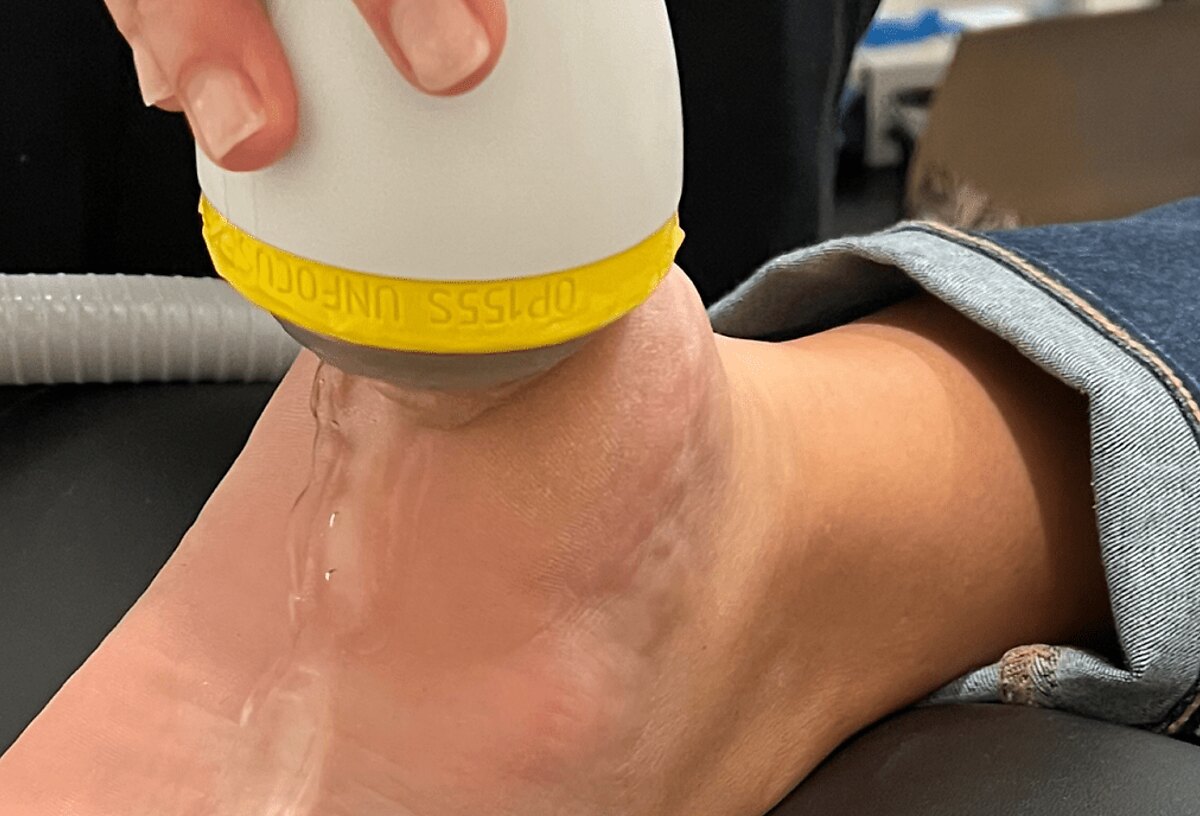
SoftWave TRT uses acoustic waves, essentially high-energy sound waves, to reach deep into tissue. What makes it distinctive is that it is a broad-focused shockwave. A patented parabolic reflector spreads the energy across a wide area rather than concentrating it in a single narrow point. That broad coverage is well suited to the larger, aching regions many seniors deal with, such as a whole knee, a hip, or the low back. These waves are designed to gently signal your body that an area needs attention and to jump-start the natural repair processes that may have slowed with age.
Here is what the therapy is designed to encourage, described in everyday terms:
- Waking up your own repair cells. SoftWave is designed to activate the resident stem cells already living in your tissues and help them migrate to where they are needed.
- Building better blood supply. Through a process called angiogenesis, the therapy aims to encourage the formation of new blood vessels using natural growth factors, improving the delivery of nutrients to the area.
- Supporting stronger tissue. It is designed to promote cell growth and support collagen, a building block of tendons, ligaments, and other connective tissue.
- Calming inflammation. SoftWave may help modulate the inflammation that drives so much joint and muscle discomfort.
- Tidying up at the cellular level. The therapy is designed to help regulate immune signaling and clear out aged, worn-out cells so healthier ones have room to work.
Importantly, SoftWave supports what your body already knows how to do. It does not replace your joint or mask a problem. It is designed to create better conditions for healing, which is a meaningful distinction for anyone who wants a natural approach.
What Sessions Feel Like, and What to Expect
For seniors especially, the practical experience matters. SoftWave is gentle and straightforward. There are no needles, no drugs, no surgery, and no downtime, so you can drive yourself to the appointment and go about your day afterward. A typical session lasts only about 10 to 15 minutes. Most people describe the sensation as a series of light taps or pulses over the treatment area. There is nothing to recover from, which means no interruption to your walking, your gardening, or your time with family.
Care is usually delivered as a series of visits over roughly six to eight weeks, since healing is a process rather than a single event. One of the encouraging aspects of this therapy is that the work continues quietly inside your body for weeks and even months after your final session as those healing responses keep unfolding. Many patients report noticing changes early in their care, though everyone's body and history are different, and Dr. Harcourt will set honest expectations based on your situation.
If staying active and independent in York matters to you, the most useful next step is simply to find out whether SoftWave fits your body and your goals. You can request a consultation with Dr. Gary Harcourt to have your specific concerns evaluated in person.
A Fit for Real Life After 60
Think about what you actually want back. Maybe it is kneeling in the flower bed without dreading the effort to stand. Maybe it is a longer walk around your neighborhood, a full round of chores without a mid-afternoon collapse into the recliner, or simply lifting a grandchild without wincing. SoftWave is cleared by the FDA for uses including activating connective tissue, temporarily increasing blood flow, and providing temporary relief of minor muscle and joint pain. For an active senior, better circulation and calmer, more comfortable joints can translate directly into more of the movement that keeps you healthy and strong.
SoftWave technology has been studied at leading institutions and is used by clinicians who care for professional and collegiate athletes. You do not have to be an athlete to benefit from the same principle those athletes rely on: giving the body better tools to repair itself. The aim for you is not a stadium. It is your garden, your sidewalk, your kitchen, and your living room floor.
An Honest Assessment First
No single therapy is right for every person or every condition, and staying active after 60 is best supported by a plan built around your individual health. That is why a consultation matters. Dr. Harcourt will listen to your history, examine the areas that trouble you, and talk candidly about whether SoftWave is a sensible fit, on its own or alongside the other care you receive. You will leave with clear information, not pressure.
Ready to Take the Next Step?
Staying active after 60 is one of the best things you can do for your long-term health, and you deserve a body that can keep up with your plans. If aches, arthritis, or slow healing have been holding you back in York, a conversation with Dr. Harcourt is a gentle, no-commitment way to explore whether SoftWave can help you keep moving.
Request your SoftWave Therapy new patient visit online today
Contact Harcourt Chiropractic Office
Harcourt Chiropractic Office
1630 West Market Street
York, PA 17404
Phone: (717) 843-2542
Our Main Office Website: https://yorkrelief.com/
‹ Back