
Blog
How Many SoftWave Sessions Will You Need? Understanding Your Treatment Timeline

How Many SoftWave Sessions Will You Need? A Realistic Look at Your Treatment Timeline in York, PA
It is one of the most common and most sensible questions we hear from people in York, PA who are considering regenerative therapy: "How many sessions will this actually take?" You want a clear answer before you commit your time and energy, and that is completely fair. The honest response is that SoftWave TRT is a series, not a single quick fix, and the exact number of visits depends on you. At Harcourt Chiropractic Office, Dr. Gary Harcourt takes the time to explain what a typical treatment course looks like and why the timeline is built the way it is, so you can plan with confidence instead of guessing.
SoftWave TRT is a non-invasive approach that uses broad-focused acoustic waves to encourage the body's own natural healing response. It is designed to work with your biology over time, and that is exactly why a thoughtful series of sessions tends to matter more than any single appointment. Below, we walk through what a realistic timeline looks like, what influences it, and why the number of sessions is worth understanding before you begin.
Why SoftWave Is a Series and Not a One-Time Treatment
If you have ever taken a course of physical therapy, followed a strength program, or rehabilitated an injury, you already understand the core idea: meaningful change in the body usually happens step by step. SoftWave follows the same logic. Each session is designed to nudge your tissues toward repair, and those effects build on one another as the weeks go by.
Think of it less like flipping a switch and more like tending a garden. A single watering helps, but consistent care over a season is what produces real growth. SoftWave is intended to stimulate a healing cascade, and that cascade needs repeated encouragement to gather momentum. This is why most treatment plans involve several visits spaced out over a period of weeks rather than one long appointment.
What a Typical Treatment Timeline Looks Like
While every person is different, many patients follow a course that spans roughly six to eight weeks, with sessions spaced out across that window rather than crammed together. Each individual session is short, often in the range of about ten to fifteen minutes, and it fits easily into a normal day. There are no needles, no drugs, no surgery, and no downtime afterward, so you can typically return to your usual routine right away.
Spacing the sessions out is intentional. The gaps between visits give your body time to respond to each treatment. In many cases, one session sets the stage and the next builds on the progress that is already underway. Rather than overwhelming the area, a spaced series allows the tissue to keep working between appointments, which is a key part of how the therapy is designed to function.
The Healing Continues After Your Last Session
Here is a point that surprises many people: your progress does not necessarily stop when your final session ends. Because SoftWave is meant to activate the body's own regenerative processes, that internal work can continue for weeks and even months after your last visit. In other words, the timeline of your treatment and the timeline of your recovery are not the same thing. The sessions get the process going, and your body carries it forward from there.
This is one reason we encourage patients to think about the full arc of care rather than judging everything by how they feel after a single appointment. Some people do notice a change early in the process, while for others the shift is more gradual. Neither pattern is right or wrong, and both are consistent with how a regenerative approach is expected to unfold.
What Influences the Number of Sessions You Need
There is no universal session count because there is no universal patient. Dr. Harcourt looks at several factors when shaping a personalized plan, including the following:
- Severity of the condition. A more significant or advanced issue may call for a longer course of care than a milder one.
- How long the issue has been present. Chronic, long-standing concerns often respond on a different timeline than something more recent.
- Your age. Healing capacity naturally varies across the lifespan, and this can affect how the body responds.
- Your overall health. General wellness, activity level, and other health factors all play a role in the pace of recovery.
- Your goals. What you are hoping to achieve helps guide how the plan is structured from the start.
Because these factors combine differently in every person, two people with what sounds like the same complaint may end up with different plans. That is a feature, not a flaw. A plan tailored to your body and your history gives you a more realistic path forward than any one-size-fits-all number ever could.
How SoftWave Helps the Body Over a Series of Visits
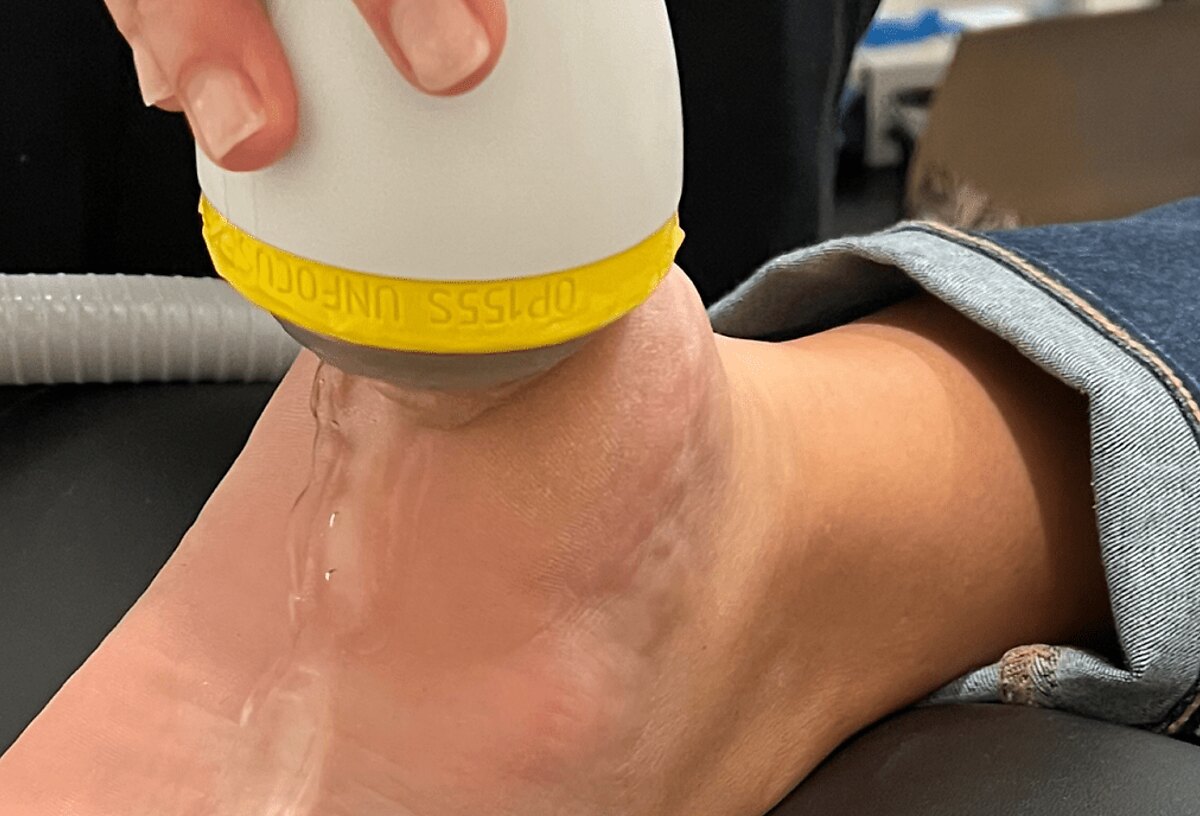
SoftWave TRT delivers broad-focused acoustic waves that penetrate deep into tissue to trigger the body's natural healing cascade. Rather than masking discomfort, it is designed to support the underlying processes that help tissue repair and recover. Spreading this stimulation across a series of sessions gives those processes repeated opportunities to build.
In plain language, here is some of what the therapy is designed to encourage:
- Stem cell activation and migration. Helping the body's own resident repair cells respond where support is needed.
- New blood vessel formation. Encouraging circulation through growth factors that support healthy blood flow.
- Cell proliferation and collagen support. Backing the structural rebuilding that tissue recovery relies on.
- Modulation of inflammation. Helping regulate the body's inflammatory signaling.
- Clearance of aged cells. Supporting the natural turnover of older, worn-out cells.
Each of these responses takes time to develop, which is another reason a series makes sense. A single session can start the conversation with your body, but repeated sessions keep that conversation going long enough to matter.
If you are ready to find out what a realistic timeline would look like for your specific situation, the best next step is a consultation. You can request a SoftWave consultation at our York, PA office and get a plan built around your body rather than a generic estimate.
What to Expect When You Begin
Getting started is straightforward. During your initial visit, Dr. Harcourt will discuss your history, your goals, and the factors described above, then outline a recommended course of care. Because each session is brief and requires no recovery time, many patients find it simple to fit treatment into a busy week. You will also have a clearer sense of the road ahead, which tends to make the whole process feel far less uncertain.
It is worth remembering that SoftWave is a supportive, non-invasive therapy and not a guaranteed cure, and it is not a replacement for the guidance of your medical providers. What it offers is a drug-free, surgery-free option designed to help your body do what it already knows how to do, given the right encouragement over a sensible timeline.
Ready to Take the Next Step?
The number of sessions you need is best answered in person, where your history and goals can shape a plan made for you. If you are in York, PA and want a clear, personalized treatment timeline instead of a rough guess, now is a great time to start the conversation.
Request your SoftWave Therapy new patient visit online today
Contact Harcourt Chiropractic Office
Harcourt Chiropractic Office
1630 West Market Street
York, PA 17404
Phone: (717) 843-2542
Our Main Office Website: https://yorkrelief.com/
‹ Back