
Blog
Are You a Candidate for SoftWave Therapy? Who It Helps and Who It Does Not

Are You a Candidate for SoftWave Therapy? A York, PA Guide to Finding Out
If you live in or around York, PA and you have been carrying pain that just will not quit, you have probably wondered whether the newer regenerative treatments you keep hearing about are actually meant for someone like you. It is a fair question. Every therapy has people it is well suited for and situations where a professional needs to look closer first. SoftWave TRT is no different. The honest answer to "am I a candidate" is that a qualified provider needs to evaluate you, but there is a lot you can learn ahead of time about who tends to benefit and where extra caution is warranted.
At Harcourt Chiropractic Office, Dr. Gary Harcourt uses SoftWave TRT as a non-invasive option for patients who want to address the source of their discomfort rather than simply mask it. SoftWave is a broad-focused acoustic wave technology, part of the OrthoGold device family, that is designed to reach deep into tissue and prompt the body's own healing response. This article walks through the kinds of people who often do well with it, the situations that call for careful professional review, and why a consultation is the only real way to know where you stand.
Who Tends to Benefit from SoftWave Therapy
SoftWave TRT was built with musculoskeletal problems in mind, so the people who tend to be a natural fit share a few common threads. If you recognize yourself in the descriptions below, it may be worth a conversation with Dr. Harcourt.
People with chronic musculoskeletal pain
Long-standing aches in the back, neck, shoulders, hips, and knees are among the most common reasons people ask about SoftWave. When pain has settled in for months or years and normal activity has become a daily negotiation, many patients start looking for something that works on the underlying tissue rather than just quieting the symptom for a few hours. SoftWave is designed to trigger a natural healing cascade in the treated area, which is why it draws interest from people whose pain has become a fixture of everyday life.
People with joint and soft tissue issues
Tendons, ligaments, and the soft tissue around joints take a beating over a lifetime of work, sport, and simply getting older. Plantar fasciitis, tennis elbow, rotator cuff irritation, and stubborn knee discomfort are the kinds of soft tissue complaints that often bring people through the door. Because SoftWave is intended to support connective tissue activation and healthy blood flow, it is frequently considered for these lingering, nagging problems that never quite resolve on their own.
People who want to avoid surgery or long-term medication
A large share of the patients who ask about SoftWave are motivated by what they want to avoid. Some are staring down a recommendation for surgery and want to explore conservative options first. Others are tired of leaning on pain medication month after month and worry about what that means for the long haul. SoftWave is non-invasive, with no needles, no drugs, and no surgical downtime, which makes it appealing to people who would rather try a gentler route before committing to something more drastic.
People who have already tried other options
It is common for someone to arrive at SoftWave only after a long road of rest, stretching, physical therapy, injections, or over-the-counter remedies that helped a little or not at all. If you have worked through the usual list and still feel stuck, a technology that approaches the problem from a different angle can be worth exploring. Trying other things first is not a strike against you. In many cases it is exactly the background that makes a person a thoughtful candidate for something new.
How SoftWave Helps
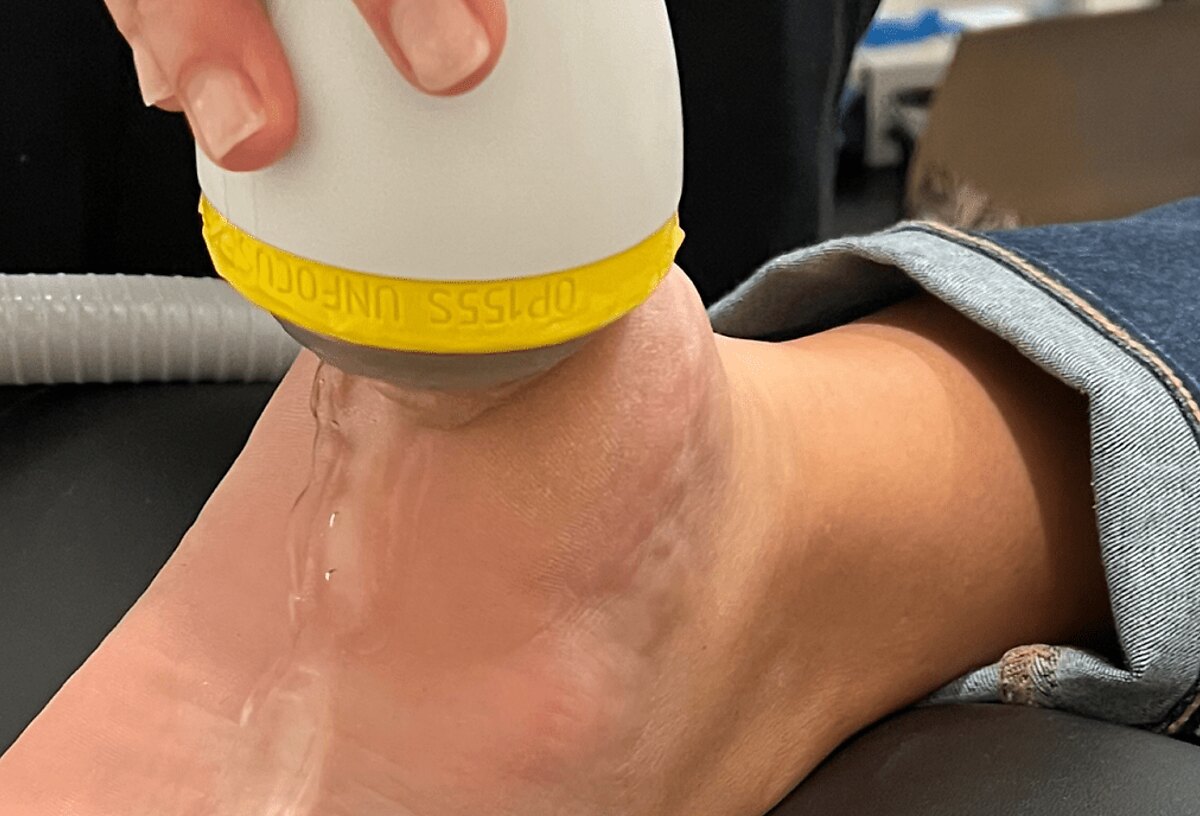
Understanding what SoftWave is designed to do makes it easier to see why certain people are drawn to it. SoftWave delivers broad-focused, spark-generated acoustic waves through a patented reflector so the energy spreads across a wide area and penetrates deep into tissue. Rather than forcing a result, it is meant to wake up the body's own repair systems in the region being treated.
In plain language, here is what the technology is designed to encourage:
- Activation and migration of the body's resident stem cells in the treated area
- Formation of new blood vessels, supported by natural growth factors, to improve local circulation
- Cell proliferation and support for healthy collagen
- Modulation of inflammation so the healing environment can settle down
- Regulation of the body's immune signaling
- Clearance of aged, worn-out cells so healthier tissue has room to work
Sessions are short, generally around 10 to 15 minutes, and most people go through a series over roughly 6 to 8 weeks. The healing process is designed to continue for weeks and even months after the final session, since the goal is to support the body's own timeline rather than override it. Some patients notice a change early in their care, though everyone responds differently and no particular result can be promised.
Where a Provider Will Look More Carefully
Being responsible means being clear that SoftWave is not automatically appropriate for everyone, and that some circumstances require a professional to evaluate carefully before any therapy begins. This is not a list you should use to diagnose yourself. It is a list of reasons a thorough provider will ask questions and, in some cases, decide that SoftWave is not the right choice for you right now.
Situations that call for careful professional review include pregnancy, a history of cancer in or near the area that would be treated, blood clotting concerns or the use of blood-thinning medication, and any active infection in the treatment zone. Certain other medical conditions and specific medications may also matter. The point is not that any one of these automatically rules you out, but that your provider needs the full picture to make a safe, sensible recommendation. Only a qualified professional can weigh these factors for your individual health situation.
This is exactly why candidacy is not something to settle from a blog post or a phone call. Dr. Gary Harcourt determines whether SoftWave is appropriate for you at a consultation, where he can review your history, understand your goals, and assess your specific circumstances before anything begins.
If you are wondering whether your pain fits the picture described here, the most useful next move is simple: schedule a consultation and let Dr. Harcourt assess your situation directly. You can request an appointment with Harcourt Chiropractic Office online and get real answers about your own case rather than guessing.
What to Expect at Your Consultation
A candidacy consultation is a conversation, not a commitment. Dr. Harcourt will ask about your symptoms, how long you have had them, what you have already tried, and what you are hoping to get back to, whether that is a full night of sleep or simply picking up a grandchild without wincing. He will review relevant health history, including anything from the caution list above, and explain honestly whether SoftWave is a reasonable option for you.
If SoftWave is a good match, you will get a clear picture of what a typical series looks like. If it is not the right fit, you deserve to hear that plainly too. Either way, you leave with better information than you walked in with.
Ready to Take the Next Step?
The only way to truly know if you are a candidate for SoftWave Therapy is to be evaluated by a professional who can look at your whole situation. Reach out today and let Dr. Harcourt help you find out where you stand.
Request your SoftWave Therapy new patient visit online today
Contact Harcourt Chiropractic Office
Harcourt Chiropractic Office
1630 West Market Street
York, PA 17404
Phone: (717) 843-2542
Our Main Office Website: https://yorkrelief.com/
‹ Back