
Blog
Does SoftWave Therapy Hurt? What the Treatment Really Feels Like
Does SoftWave Therapy Hurt? An Honest Answer for York, PA Patients
If you are considering a new therapy for stubborn pain, one of the first questions on your mind is probably a simple one: is this going to hurt? It is a fair thing to ask. Many people who come to us in York, PA have already tried treatments that were uncomfortable, invasive, or intimidating, so a little caution is understandable. At Harcourt Chiropractic Office, Dr. Gary Harcourt hears this question almost every day, and he believes you deserve a straight answer rather than a sales pitch. SoftWave TRT is a non-invasive therapy that most patients tolerate very well, and this article walks through exactly what the treatment feels like so you can decide with confidence.
The short version is this: SoftWave therapy is not painless for absolutely everyone, but the vast majority of patients describe it as very manageable. It usually feels like a firm tapping or pulsing against the skin. There are no needles, no injections, and no numbing agents involved. If a spot feels tender, the intensity can be adjusted on the spot. For most people, the sensation is far more tolerable than the treatments they were dreading, and that is a big part of why so many patients stick with the full series.
What SoftWave Therapy Actually Feels Like
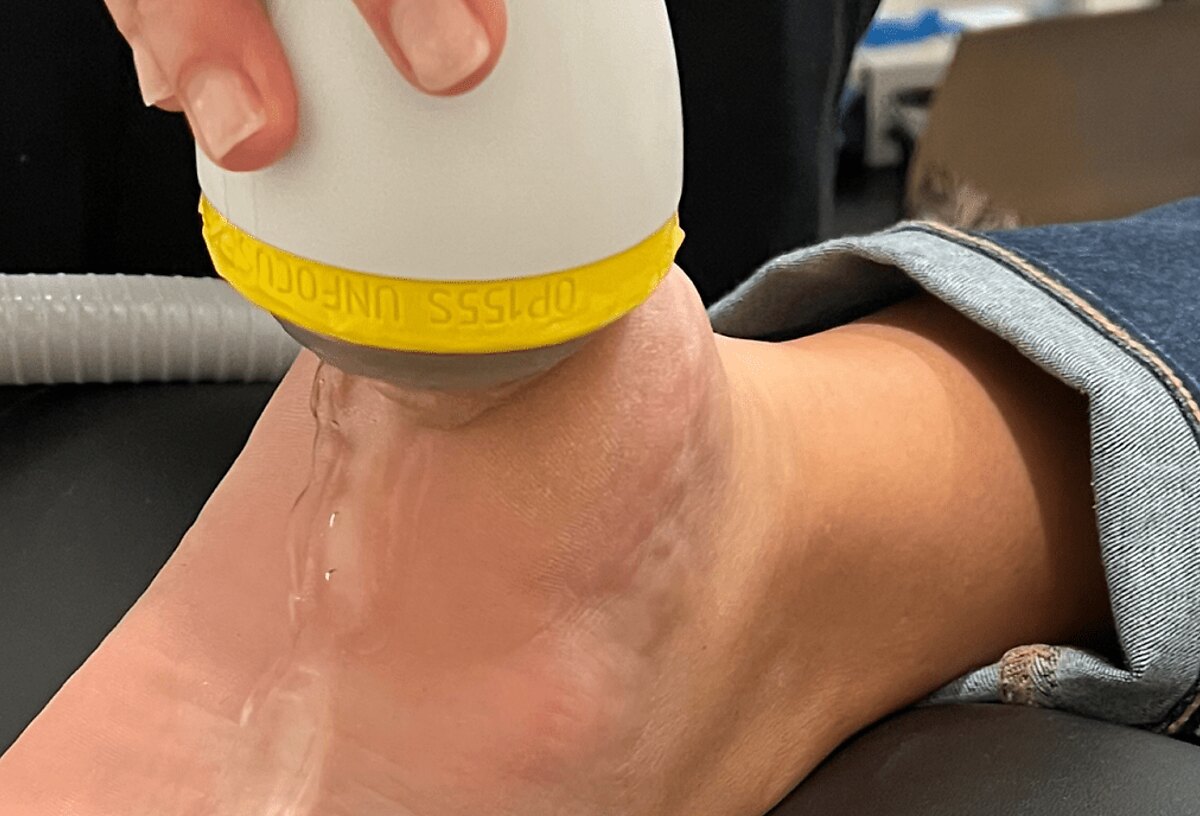
SoftWave TRT uses a handheld applicator that is moved across the treatment area. As the device works, it delivers broad-focused acoustic waves into the tissue. On the surface, what you feel is a rhythmic tapping or pulsing sensation, a bit like a firm, repetitive knock against the body. The applicator has direct contact with your skin through a thin layer of gel, so there is a physical sensation, but it is not sharp and it is not a burning feeling.
Most patients settle into the rhythm quickly. The sensation is noticeable, and over areas of active pain or inflammation it can feel more intense, because those tissues are already sensitive. That is actually normal and expected. Some patients even describe those spots as feeling a little tender or achy during treatment, which often lines up with exactly where the problem is. The good news is that this is not a fixed, take-it-or-leave-it experience. The energy level is adjustable, so Dr. Harcourt can dial the intensity up or down to keep you comfortable while still delivering an effective session.
Why the Intensity Can Be Adjusted
Everyone has a different tolerance, and every body area is different. The skin over a bony region like the elbow or ankle can feel more sensitive than the thicker muscle of a shoulder or hip. Because the device settings are flexible, treatment is tailored to you rather than forced into a one-size-fits-all setting. If something feels like too much, you simply say so, and the setting is lowered. Many patients find that as their tissue responds over a series of visits, areas that felt tender early on become far less sensitive.
No Needles, No Numbing, No Downtime
A large part of the fear around pain treatments comes from what those treatments involve. Injections mean a needle. Surgery means anesthesia, incisions, stitches, and a recovery period. Even some in-office procedures require numbing agents that come with their own discomfort. SoftWave TRT sits in a very different category.
Consider what SoftWave does not require:
- No needles and no injections into the joint or muscle.
- No numbing agents or anesthesia to get through the session.
- No incisions, stitches, or surgical recovery.
- No drugs and no prescriptions tied to the treatment itself.
- No downtime afterward, so most people return to their normal day.
A typical session runs about 10 to 15 minutes. You stay clothed except for the area being treated, you remain fully awake and aware, and when the session ends you can usually drive yourself home and go about your errands. For people who have been putting off care because they dreaded the recovery time of a bigger procedure, this is often a genuine relief.
How SoftWave Helps Without Being Invasive
The reason SoftWave can be relatively gentle and still be effective comes down to how it works. Rather than cutting into tissue or masking pain with medication, the acoustic waves are designed to reach deep into the body and encourage its own natural repair processes. SoftWave TRT is the only broad-focused shockwave technology, which means the waves spread across a wide area of tissue rather than concentrating on one narrow point, and that broad coverage is part of what makes the sensation more tolerable.
The Science in Plain Language
SoftWave is designed to support healing through several biological responses:
- Activation and migration of the body's own resident stem cells toward the treated area.
- Angiogenesis, meaning the formation of new blood vessels, supported by growth factors such as VEGF and eNOS.
- Cell proliferation and support for collagen, which is a building block of healthy tissue.
- Modulation of inflammation so the body can move toward repair.
- Regulation of immune signaling, including toll-like receptors.
- Clearance of aged, senescent cells that can slow recovery.
Because the goal is to stimulate real healing rather than simply cover up a symptom, many patients report meaningful and lasting change. It is worth noting that SoftWave technology, part of the OrthoGold device family, has been studied at leading institutions and is used by clinicians who work with professional and collegiate athletes.
If you have been avoiding treatment because you were afraid it would hurt, the honest truth is that most York patients find SoftWave far easier to sit through than they expected. Schedule a consultation with Harcourt Chiropractic Office and let Dr. Harcourt walk you through what to expect for your specific concern.
What to Expect After a Session
During the treatment itself, most people feel only the tapping sensation described above. Afterward, it is possible to notice some mild, temporary soreness in the treated area, a little like the feeling after a good workout or a deep massage. This is generally a sign that the body is responding and beginning its repair process. Any soreness of this kind is usually short-lived and settles on its own.
This is very different from the recovery associated with surgery or the lingering discomfort of an injection site. There is no downtime to plan around, and there is no long healing window before you can use the area again. Many patients notice a change after the very first session, though we never promise that outcome, since every person and every condition is different. The healing process continues to unfold in the weeks and even months after your last visit as the body keeps responding.
An Honest Comparison
When patients weigh SoftWave against other options, the comparison is usually reassuring. A firm, adjustable tapping sensation for 10 to 15 minutes, with the possibility of mild soreness afterward, stands in sharp contrast to the sting of a needle, the risks of surgery, or the side effects that can come with long-term pain medication. SoftWave TRT is FDA-cleared for uses including activation of connective tissue, a temporary increase in blood flow, and temporary relief of minor muscle and joint pain, and it is not designed to replace the advice of your medical providers. For many people, it is simply a far more comfortable path to try first.
Ready to Take the Next Step?
You do not have to keep putting off care because you are worried about pain. A brief conversation with Dr. Harcourt can answer your questions honestly and show you just how manageable SoftWave therapy really is. Take that first step toward relief today.
Request your SoftWave Therapy new patient visit online today
Contact Harcourt Chiropractic Office
Harcourt Chiropractic Office
1630 West Market Street
York, PA 17404
Phone: (717) 843-2542
Our Main Office Website: https://yorkrelief.com/
‹ Back