
Blog
How SoftWave Therapy Activates Your Body's Own Stem Cells
Can Your Body Heal Itself? How SoftWave Therapy Wakes Up Your Own Stem Cells in York, PA
When pain lingers for months, it is easy to feel like your body has simply stopped healing. The good news is that your body still holds a remarkable repair system, and much of it involves your own stem cells. At Harcourt Chiropractic Office in York, PA, Dr. Gary Harcourt offers SoftWave Tissue Regeneration Therapy (TRT) as a non-invasive way to help support that natural system. This article explains, in plain language, what stem cells are, why they sometimes stay quiet, and how SoftWave is designed to help activate and recruit them to areas that need repair.
What Are Stem Cells, and Why Do You Already Have Them?
Stem cells are often talked about as something exotic or lab-grown, but the truth is simpler and more encouraging. Your body carries its own population of resident stem cells, sometimes called mesenchymal stem cells, tucked into tissues throughout your body. Think of them as a maintenance crew that stays on standby, ready to respond when tissue is damaged. When you cut your skin or strain a muscle, these cells help coordinate the cleanup and rebuilding that follows.
These resident cells are special because they are not yet committed to a single job. Depending on the signals they receive, they can support the creation of new tissue, help form fresh blood vessels, and release chemical messengers that guide other cells in the healing process. In a healthy, well-supplied injury, this crew shows up quickly and gets to work.
Why Dormant Cells Sometimes Stay Asleep
Here is the frustrating part. In many chronic problems, those resident stem cells remain dormant. They are present, but they are not being called into action the way they would be in a fresh injury. Several things can contribute to this. Older or long-standing injuries may have poor blood flow, which means fewer signals reach the area. Scar tissue can wall off a region. Repetitive strain can leave tissue in a low-grade, stalled state where inflammation lingers but true repair never finishes.
The result is a stubborn ache or weakness that does not resolve on its own. The repair crew is standing by, but nobody has rung the bell loudly enough to bring them to the job site. This is exactly the gap that SoftWave therapy is designed to address.
SoftWave as a Mechanical Wake-Up Call
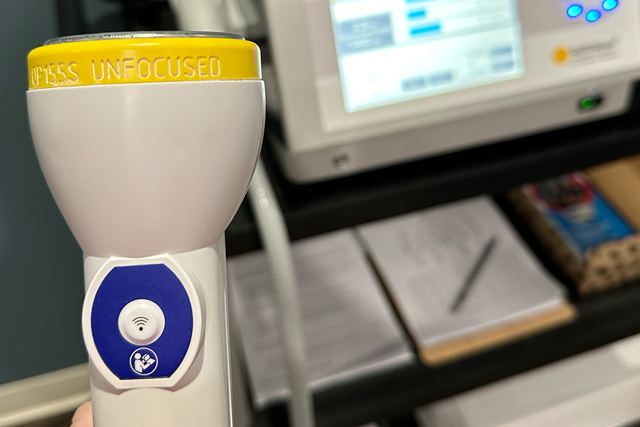
SoftWave TRT uses electrohydraulic, spark-generated acoustic waves. Through a patented parabolic reflector, these waves are broad-focused, meaning they spread out to cover a wide area rather than concentrating on a single narrow point. This broad-focused approach sets SoftWave apart from radial, electromagnetic, and piezoelectric focused shockwave devices. The waves penetrate deep into tissue and are designed to trigger the body's natural healing cascade.
So how does a sound wave talk to a cell? Cells are surprisingly responsive to physical force. They sense pressure, stretch, and vibration through their outer membranes, and they translate those mechanical inputs into biological activity. This process has a name in the research world: mechanotransduction, which simply means turning a mechanical signal into a cellular response. When the acoustic waves pass through tissue, they deliver a gentle, controlled mechanical stimulus that the resident stem cells can interpret as a signal to wake up.
In plain terms, SoftWave acts like a knock on the door. The waves are not adding stem cells from the outside. Instead, they are designed to stir the cells you already have, encouraging them to become active and to move toward the area that needs attention. Research suggests that this kind of acoustic stimulation can support the activation and migration of resident stem cells, helping them travel to the site where repair is needed.
How SoftWave Helps: The Science in Simple Terms
Once resident stem cells are activated, a chain of helpful events can begin. SoftWave is designed to support several of these natural processes at once. Here is a plain-language look at what may be happening beneath the surface:
- Stem cell activation and migration: The acoustic waves are designed to help rouse dormant resident stem cells and encourage them to move toward the injured area.
- Growth factor signaling: Activated cells release chemical messengers, including growth factors such as VEGF and eNOS, that act like instructions telling nearby cells what to do next.
- New blood vessel formation: Those growth factors support angiogenesis, the creation of new blood vessels, which brings more oxygen and nutrients to tissue that may have been under-supplied.
- Cell proliferation and collagen support: Better signaling and blood flow can encourage cells to multiply and to support collagen, one of the building blocks of healthy connective tissue.
- Inflammation and immune signaling: SoftWave may help modulate inflammation and regulate immune signaling, which can move tissue out of a stalled state and into genuine repair.
- Clearance of aged cells: The therapy may also help the body clear out aged, worn-out cells so that fresh, functional tissue has room to develop.
You do not need to memorize the biology to benefit from it. The key idea is that one mechanical signal can set off many cooperating responses, all pointing toward the same goal: healthier, better-supplied tissue that can finally finish the repair it started.
What a Session Actually Feels Like
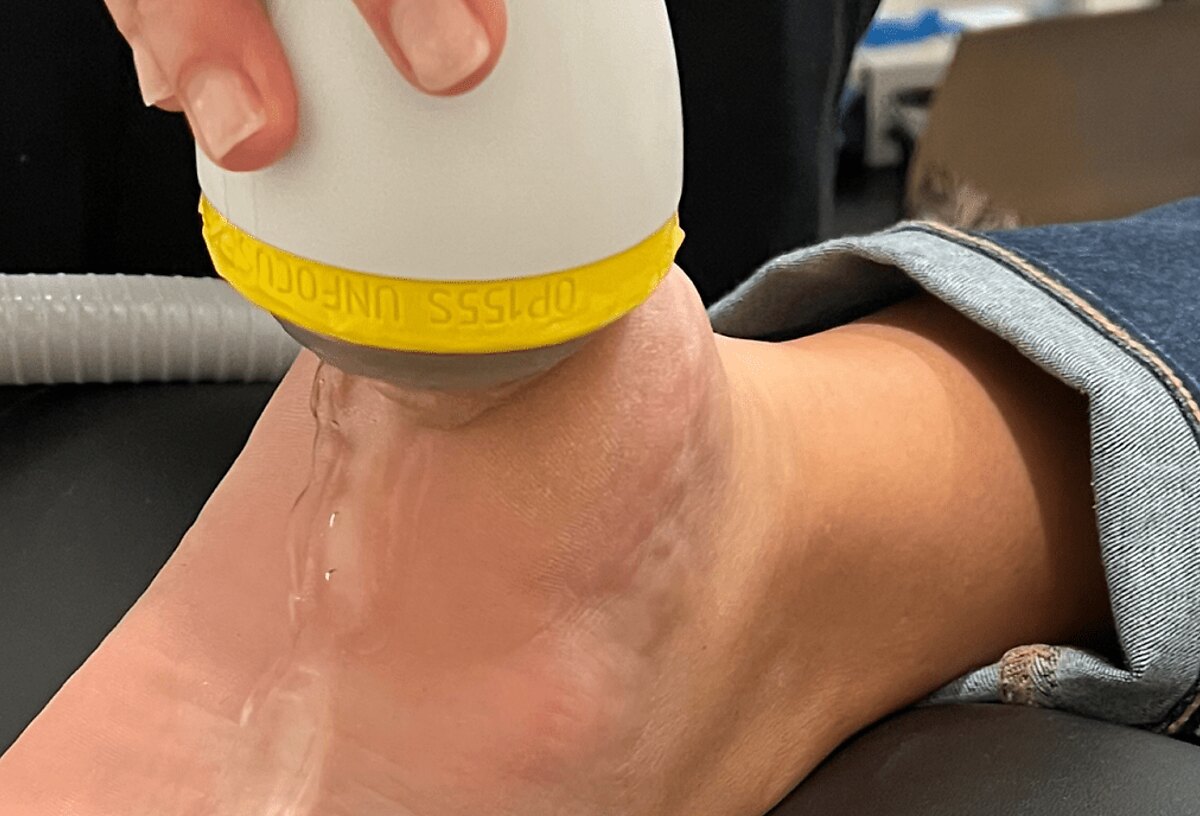
Because SoftWave works with your body rather than against it, the experience is refreshingly straightforward. Treatment is non-invasive, with no needles, no drugs, no surgery, and no downtime. A typical session lasts about 10 to 15 minutes. Dr. Harcourt applies the applicator to the target area, and most people describe a tapping or pulsing sensation as the waves do their work.
Care is usually delivered as a series of sessions over roughly six to eight weeks. One point that surprises many patients is that healing does not stop when the sessions end. Because the therapy is designed to support your body's own repair processes, that activity can continue for weeks to months after your final visit. Many patients report noticing changes along the way, though everyone responds differently and results cannot be guaranteed.
If you live in or around York, PA and you have been waiting for a stubborn injury to turn the corner, this may be the right moment to learn whether SoftWave fits your situation. Request your SoftWave Therapy consultation with Harcourt Chiropractic Office online and take the first step toward supporting your body's own healing.
Setting Honest Expectations
SoftWave is an exciting tool, and it is important to describe it accurately. The technology has been studied at leading institutions and is used by clinicians who work with professional and collegiate athletes. Its FDA-cleared uses include activation of connective tissue, a temporary increase in blood flow, temporary relief of minor muscle and joint pain, treatment of chronic diabetic foot ulcers, and treatment of acute second-degree burns.
SoftWave therapy is not a guaranteed cure, and it is not a replacement for medical advice. What it offers is a non-invasive way to help your body do what it is already built to do: repair itself. During a consultation, Dr. Harcourt can review your history, examine the area of concern, and help you understand whether this approach makes sense for your goals.
Ready to Take the Next Step?
Your body still has a repair crew ready to work, and SoftWave is designed to help call those cells into action. If chronic pain has kept you sidelined in York, PA, now is a good time to explore a natural, non-invasive path forward.
Request your SoftWave Therapy new patient visit online today
Contact Harcourt Chiropractic Office
Harcourt Chiropractic Office
1630 West Market Street
York, PA 17404
Phone: (717) 843-2542
Our Main Office Website: https://yorkrelief.com/
‹ Back