

Blog
Drug-Free Relief for Chronic Headaches and Migraines with SoftWave Therapy

When the Headache Starts in Your Neck: A Drug-Free Path for York, PA
If you live in York, PA and you have spent years reaching for pain relievers just to get through a workday clouded by chronic headaches or migraines, you already know how much they can steal. Missed family dinners, canceled plans, and the quiet dread of feeling one build again all add up. What many people do not realize is that a large share of recurring headaches are not purely a problem inside the head. They often carry a cervical, or neck-related, component along with muscular tension in the upper back and shoulders. That connection is exactly why a non-drug approach focused on soft tissue and circulation is worth understanding.
At Harcourt Chiropractic Office, Dr. Gary Harcourt helps York-area patients look past the surface symptom and toward the physical contributors that may be feeding their pain. One of the tools available in the office is SoftWave TRT, a regenerative therapy that is designed to support blood flow and address the muscle and joint discomfort that can play a role in tension-type headaches. It is important to be clear from the start: SoftWave is not a cure for migraines, and it is not a substitute for proper medical evaluation. Results vary from person to person. What it can offer is a responsible, drug-free option for the mechanical and muscular pieces of the headache puzzle, when a provider determines those pieces are present.
The Neck and Muscle Connection Behind Many Headaches
Headaches come in many forms, and the causes are not all the same. Tension-type headaches and cervicogenic headaches, meaning headaches that originate from structures in the neck, frequently involve tight muscles, restricted joints, and irritated soft tissue in the upper cervical spine and the base of the skull. When the muscles that run from your shoulders up into your neck stay contracted for hours, whether from desk work, driving, phone posture, or stress, they can refer pain upward and forward into the head.
Migraine is a distinct neurological condition with its own mechanisms, and no one should suggest that neck tension alone explains every migraine. That said, many people who experience migraines also carry significant neck and upper-back tension, and some report that this tension acts as a trigger or an amplifier. Because the cervical spine and the muscles around it can contribute to how often and how intensely certain headaches occur, addressing those physical factors is a reasonable part of a broader plan. The key word is contribute. A thorough evaluation is what separates guesswork from a targeted approach.
This is where a provider matters. Dr. Harcourt takes time to understand your history, your patterns, and your triggers before recommending anything. Some headaches need medical management, imaging, or referral, and honest care means recognizing that. When the picture points to muscular tension and cervical involvement, therapies that improve local circulation and calm irritated tissue become relevant.
How SoftWave Therapy Works
SoftWave TRT is a form of regenerative shockwave therapy. It uses electrohydraulic, spark-generated acoustic waves that are broad-focused, meaning they spread across a wide area rather than concentrating on a single narrow point. A patented parabolic reflector shapes these waves so they can penetrate deep into tissue. SoftWave is the only broad-focused shockwave device of its kind, which sets it apart from radial, electromagnetic, and piezoelectric focused systems. The goal is to reach the tissue and prompt the body's own healing response.
Here is the plain-language science of what these waves are designed to encourage in the treated area:
- Activation and migration of the body's resident stem cells to areas that need repair.
- Angiogenesis, the formation of new blood vessels, supported by growth factors such as VEGF and eNOS.
- Cell proliferation and support for healthy collagen, which is part of resilient soft tissue.
- Modulation of inflammation so the local environment can settle.
- Regulation of immune signaling through pathways such as toll-like receptors.
- Clearance of aged, senescent cells that can slow recovery.
For someone whose headaches carry a muscular and cervical component, the relevant part is straightforward. SoftWave is FDA-cleared for the temporary increase of blood flow, for the temporary relief of minor muscle and joint pain, and for the activation of connective tissue. Improving circulation and easing tension in the muscles of the neck, shoulders, and upper back may help reduce the frequency and intensity of tension-related headaches for some patients. That is a measured claim, not a promise, and it is the honest way to frame this therapy.
What a Session Feels Like
One reason patients appreciate this option is how simple it is. SoftWave therapy is non-invasive. There are no needles, no drugs, and no surgery, and there is no downtime afterward, so you can return to your day. A typical session takes only about 10 to 15 minutes. Most people go through a series of sessions spread over roughly 6 to 8 weeks, and because the therapy works with your body's own healing processes, improvement can continue for weeks to months after the final session. Some people notice a change early in their care, though everyone responds differently and no single timeline is guaranteed.
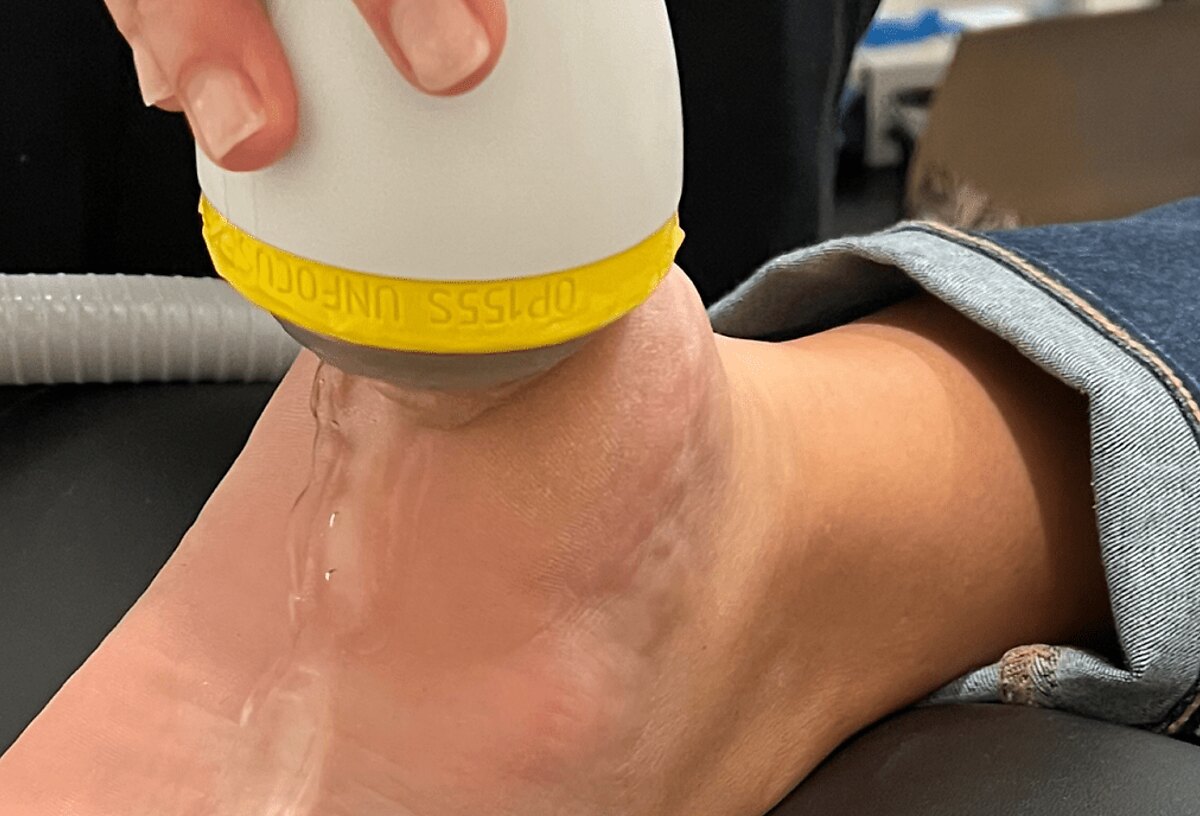
During a session for headache-related tension, the applicator is typically used along the muscles of the neck, the base of the skull, and the upper back and shoulders, guided by where Dr. Harcourt identifies restriction and tenderness. The sensation is usually described as a firm tapping. Because there is nothing to recover from, SoftWave often fits neatly alongside other parts of a care plan, such as chiropractic adjustments, posture guidance, and simple at-home habits.
If chronic headaches have been running your calendar and you want to understand whether neck and muscle tension are part of your story, the next step is a professional evaluation. Request an appointment with Dr. Gary Harcourt to talk through your symptoms and whether SoftWave Therapy fits your situation.
An Honest Look at What SoftWave Can and Cannot Do
Being clear about expectations is part of good care. SoftWave TRT does not treat the neurological triggers of migraine directly, and it will not replace medications or care that your physician has prescribed. It is not a cure, and no responsible provider would present it as one. What it can do is target the blood flow and the muscle and joint discomfort that fall within its FDA-cleared uses, which for the right patient may lower the burden of tension-related headaches.
SoftWave technology has been studied at leading institutions and is used by clinicians who work with professional and collegiate athletes, which speaks to how the therapy is regarded for musculoskeletal support. Still, the most important factor in your outcome is a careful evaluation of what is actually driving your headaches. That is why the conversation with Dr. Harcourt comes first. He can help determine whether your pattern includes the cervical and muscular contributors this therapy is suited to address, or whether a different path makes more sense for you.
Simple Habits That Support Your Progress
Alongside professional care, a few daily habits can help protect your neck and shoulders from the tension that feeds headaches. Take regular breaks from screens, keep your monitor at eye level, stay hydrated, and give your upper back gentle movement throughout the day. These changes will not replace treatment, but they support the work being done in the office.
Ready to Take the Next Step?
You do not have to keep organizing your life around the next headache, and you do not have to reach for another pill without understanding what is really going on in your neck and shoulders. A drug-free evaluation with Dr. Harcourt is a low-pressure way to find out whether SoftWave Therapy fits your situation.
Request your SoftWave Therapy new patient visit online today
Contact Harcourt Chiropractic Office
Harcourt Chiropractic Office
1630 West Market Street
York, PA 17404
Phone: (717) 843-2542
Our Main Office Website: https://yorkrelief.com/
‹ Back