
Blog
Desk Job, Aching Neck and Back? SoftWave Relief for Office Professionals
Desk Job, Aching Neck and Back? SoftWave Relief for Office Professionals in York, PA
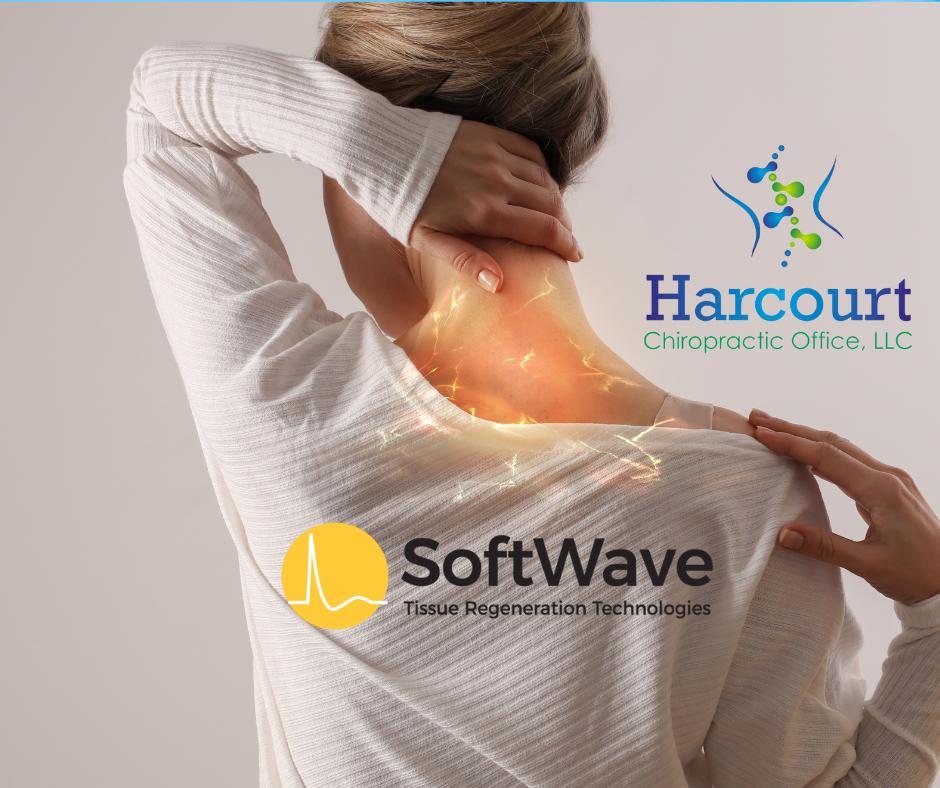
If you spend your workday at a desk in York, PA, you already know the feeling. By mid-afternoon your neck feels stiff, your shoulders creep up toward your ears, and a dull ache settles into your upper back. Maybe a tension headache is building behind your eyes. You stretch, you roll your shoulders, you promise yourself you will sit up straighter, and for a few minutes it helps. Then the deadline hits, you lean back into the screen, and the cycle starts over. For office professionals, remote workers, and anyone glued to a laptop for eight or more hours a day, this kind of chronic tension is not just annoying. It can chip away at your focus, your mood, and your quality of life.
At Harcourt Chiropractic Office, Dr. Gary Harcourt sees this pattern all the time. Desk-related neck and back pain has become one of the most common complaints among working adults in our area. The good news is that you have options beyond painkillers and a heating pad. SoftWave TRT, a non-invasive regenerative therapy offered right here in York, is designed to address the underlying soft tissue behind desk-related pain and support your body's own healing process. Below we will look at why office work wears on your body, a few practical habits that help, and how SoftWave fits into a real recovery plan.
Why Desk Work Takes Such a Toll
The human body was built to move. Sitting for long stretches, especially in a fixed forward posture, works against that design in several ways. When you understand what is actually happening, the aches start to make a lot more sense.
Tech Neck and Forward Head Posture
Every time you tilt your head down to look at a phone or lean toward a monitor, the muscles at the base of your skull and along the back of your neck have to work harder to hold your head up. Your head is heavy, and the further it drifts forward, the more strain lands on the neck and upper back. Over months and years, this repeated loading can leave the small stabilizing muscles fatigued and irritated, a pattern many people now call tech neck.
Upper Back and Shoulder Tension
Typing and mousing keep your arms out in front of you, which rounds the shoulders forward and stretches the muscles between your shoulder blades. Those muscles end up in a constant low-grade tug of war. That is why so many desk workers describe a knotted, burning band across the upper back that never fully lets go, even on weekends.
The Low Back and Hips
Sitting shortens the muscles at the front of your hips and puts steady pressure on the discs and structures of your lower back. Add a chair that does not fit well, and you have a recipe for stiffness and aching that follows you from the office to the couch.
Headaches From Neck Tension
Many tension-type headaches actually start in the neck. When the muscles at the top of the spine stay tight and overworked, they can refer pain up into the base of the skull and forehead. If your headaches tend to arrive on busy work afternoons, your neck may be a bigger part of the story than you realized.
Simple Habits That Help During the Workday
Before we talk about therapy, it is worth covering the everyday adjustments that give your body a fighting chance. None of these replace professional care, but they can reduce how much strain you pile on each day.
- Raise your screen. Position the top of your monitor at roughly eye level so you are not constantly looking down. A stack of books or a laptop stand works fine.
- Support your low back. Sit all the way back in your chair and use a small cushion or lumbar support so your spine keeps its natural curve.
- Keep elbows close. Set your keyboard and mouse so your elbows stay near your sides and your shoulders can relax down.
- Move often. Stand, stretch, or take a short walk every 30 to 45 minutes. Movement is the single best antidote to sitting.
- Loosen the neck. A few gentle chin tucks and shoulder rolls through the day can ease the muscles that tighten from screen time.
These changes matter. Still, if you have been dealing with desk-related pain for months or years, habit tweaks alone often are not enough to undo the accumulated wear on the soft tissue. That is where a therapy aimed at the tissue itself comes in.
How SoftWave Targets Desk-Related Pain
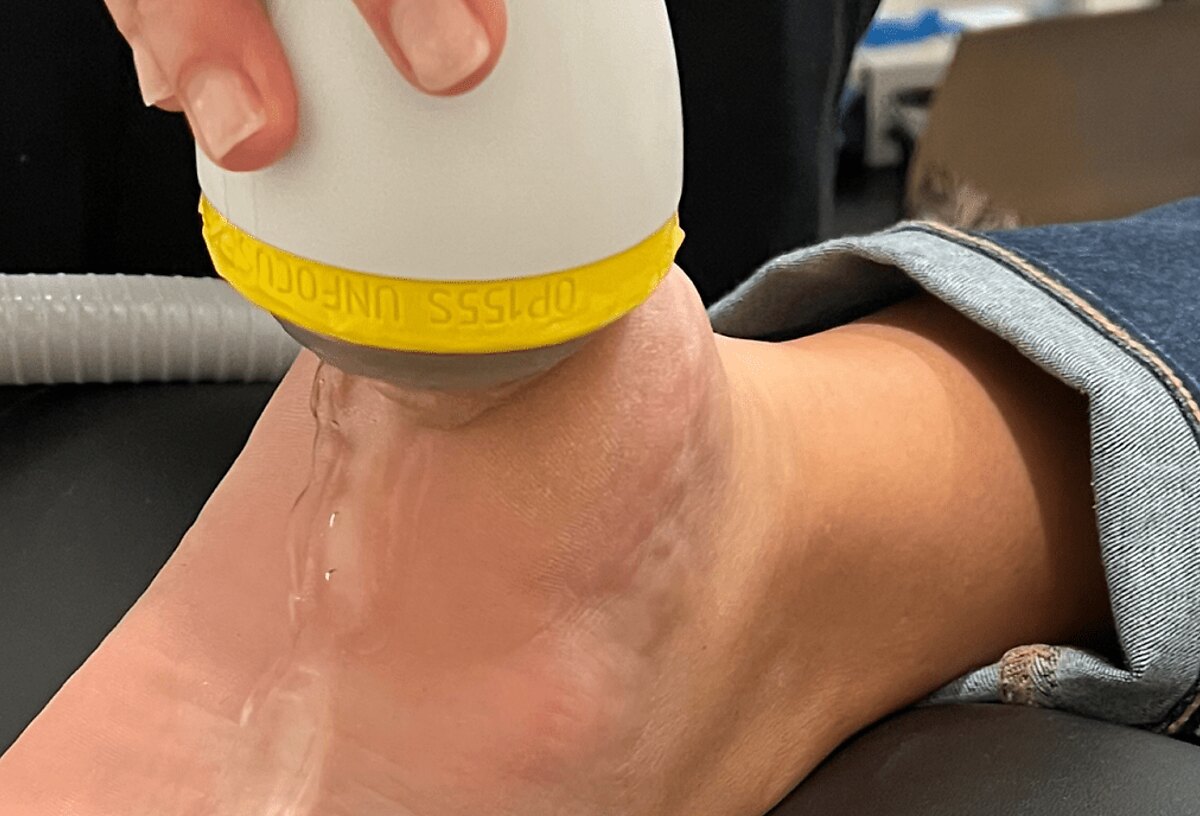
SoftWave TRT uses electrohydraulic, spark-generated acoustic waves delivered through a patented parabolic reflector. What makes it different from other shockwave options is that these waves are broad-focused, meaning they spread out to cover a wide, deep area of tissue rather than concentrating on a single narrow point. For the layered, spread-out tension of the neck, shoulders, and upper back, that broad coverage is a natural fit. The waves penetrate deep enough to reach the muscles, tendons, and connective tissue that hold onto chronic strain, where they are designed to trigger the body's own natural healing cascade.
In plain language, here is what SoftWave is designed to encourage in the treated tissue:
- Stem cell activation. It may help wake up and recruit your body's resident stem cells to areas of chronic strain.
- New blood flow. It supports the formation of new blood vessels through growth factors, along with a temporary increase in circulation to tired tissue.
- Tissue and collagen support. It is designed to promote cell proliferation and collagen, the building blocks of healthy, resilient soft tissue.
- Calmer inflammation. It may help modulate inflammation and regulate the immune signaling involved in nagging, long-standing irritation.
- Cellular cleanup. It supports the clearance of aged, worn-out cells so healthier tissue has room to work.
The experience itself suits a busy work schedule. SoftWave is non-invasive, with no needles, drugs, surgery, or downtime. Each session runs about 10 to 15 minutes, and most people go through a series over roughly 6 to 8 weeks. Because the therapy stimulates your own biology, healing can continue for weeks and even months after your final session. Many patients report noticing a difference early in their care, though everyone responds on their own timeline.
If you are tired of pushing through the workday with a stiff neck and an aching back, this is a good moment to explore whether SoftWave is right for you. Schedule a consultation with Harcourt Chiropractic Office in York, PA and let Dr. Gary Harcourt evaluate what is really driving your desk-related pain.
What Office Professionals Can Expect
One of the biggest advantages for working adults is how easily SoftWave fits into a full calendar. A typical visit is short enough to manage over a lunch break, and there is no recovery period afterward, so you can head straight back to your responsibilities. Because the approach is drug-free, you are not trading pain for the fog of medication.
It is also worth knowing that SoftWave technology has been studied at leading institutions and is used by clinicians who work with professional and collegiate athletes. The FDA-cleared uses of the device include activation of connective tissue, a temporary increase in blood flow, and temporary relief of minor muscle and joint pain, which speaks directly to the kind of soft tissue strain desk work produces. SoftWave is not a promise of a cure, and it does not replace medical advice, but for many people it offers a practical, regenerative path forward when stretches and over-the-counter relief have stalled.
Dr. Harcourt will take the time to understand your work setup, your symptoms, and your goals, then help you decide whether SoftWave, chiropractic care, or a combination makes the most sense for your situation.
Ready to Take the Next Step?
You do not have to accept an aching neck and back as the price of a desk job. If tech neck, upper back tension, or work-related headaches have become part of your daily routine, reach out and let us help you get to the root of it. Relief may be closer than you think.
Request your SoftWave Therapy new patient visit online today
Contact Harcourt Chiropractic Office
Harcourt Chiropractic Office
1630 West Market Street
York, PA 17404
Phone: (717) 843-2542
Our Main Office Website: https://yorkrelief.com/
‹ Back