
Blog
Angiogenesis Explained: How SoftWave Restores Blood Flow to Heal Tissue
Why Some Injuries in York, PA Just Will Not Heal
If you have ever wondered why a nagging shoulder, a cranky knee, or a stubborn tendon keeps hurting month after month, the answer often comes down to one quiet factor: blood flow. Blood is the delivery system your body relies on to carry oxygen, nutrients, and repair signals to injured tissue, and to haul away the waste that builds up during the healing process. When the blood supply to an area is poor, healing slows to a crawl. That is exactly why so many people across York, PA feel stuck with chronic aches that never seem to fully resolve.
At Harcourt Chiropractic Office, Dr. Gary Harcourt sees this pattern all the time. Patients come in frustrated because they have tried rest, medication, and time, yet the pain lingers. One of the tools Dr. Harcourt uses to address the root of the problem is SoftWave TRT, a non-invasive therapy designed to stimulate the body's own repair machinery, including the growth of new blood vessels. That process of building new vessels has a name: angiogenesis. Understanding it helps explain why SoftWave takes a different approach than simply masking symptoms.
What Is Angiogenesis, in Plain Language?
Angiogenesis is the formation of new blood vessels from existing ones. Your body does this naturally throughout life. It is how a growing child develops a healthy circulatory network, how a healing wound knits itself back together, and how muscle tissue adapts to exercise. In simple terms, angiogenesis is your body extending its plumbing so that fresh, oxygen-rich blood can reach the places that need it.
Think of the injured area as a neighborhood at the end of a long road. If only one small road leads in, deliveries are slow and limited. Supplies trickle in, trash piles up, and the neighborhood struggles. Now imagine the body building several new roads directly into that neighborhood. Suddenly deliveries speed up, supplies arrive in abundance, and cleanup crews can get to work. That is what angiogenesis does for injured tissue. More vessels mean more access, and more access means a better environment for healing.
Why Blood Flow Matters So Much for Healing
Healing is not a passive event. It is an active, energy-hungry construction project, and blood flow is the supply line that keeps it running. Here is what good circulation actually delivers to a healing site:
- Oxygen. Cells that rebuild tissue need oxygen to produce energy. Low oxygen slows nearly every repair step.
- Nutrients. Proteins, amino acids, and other building blocks arrive through the bloodstream to construct new tissue and collagen.
- Repair and signaling cells. Immune cells and repair cells travel through blood vessels to reach the damaged area and coordinate the rebuild.
- Waste clearance. The blood carries away cellular debris and byproducts of inflammation, keeping the site clean enough to heal.
When any of these are in short supply, the tissue cannot repair efficiently. This is a big reason why certain injuries drag on for so long.
Why Chronic Injuries Tend to Have Poor Blood Supply
Some tissues in the body simply do not have rich blood supplies to begin with. Tendons, ligaments, and cartilage are classic examples. They receive far less circulation than muscle does, which is part of why a tendon problem can outlast a muscle strain by many months. When these low-circulation tissues get injured, they lack the robust delivery network needed for a quick recovery.
Chronic injuries can also create a frustrating cycle. Persistent inflammation, scar tissue, and reduced movement can all further limit blood flow to an already under-supplied area. The result is a stubborn injury that seems to stall out. The tissue is not beyond help, but it is starved of the resources it needs to finish the job. Improving local circulation is often the missing piece.
How SoftWave Is Designed to Restore Blood Flow
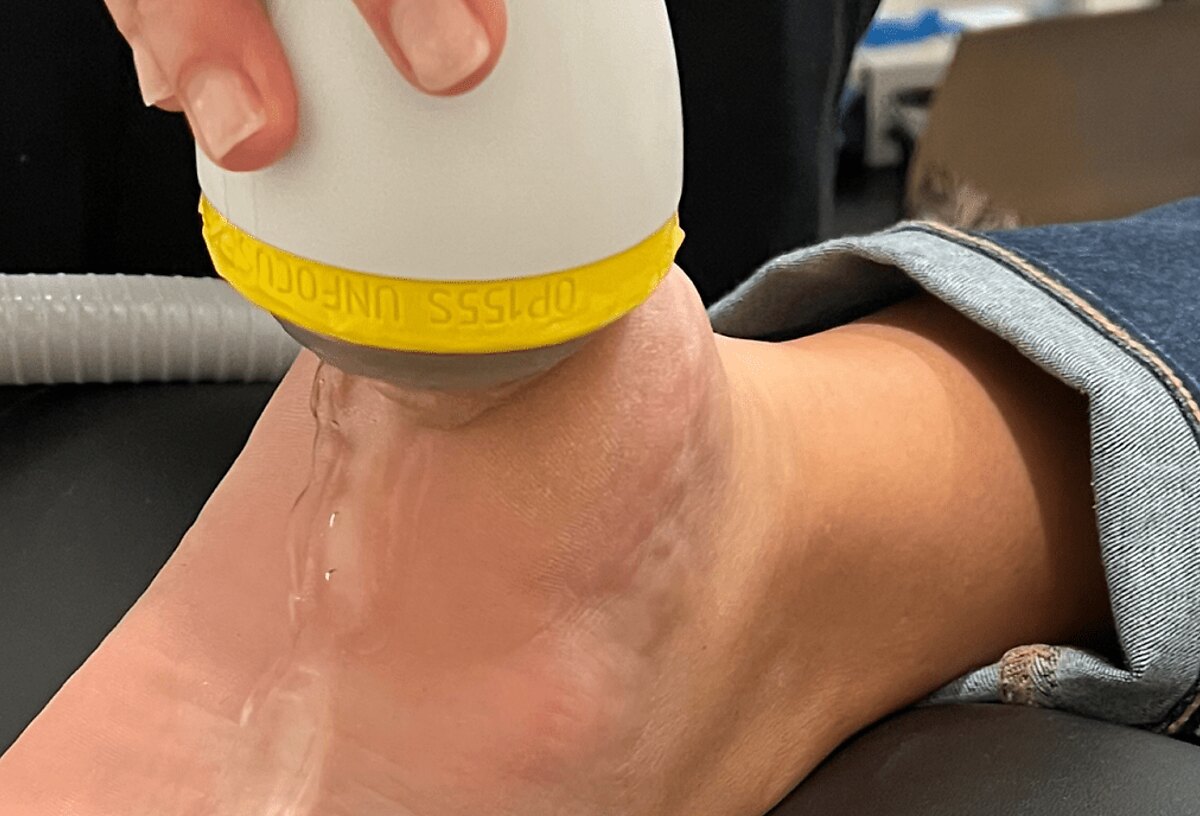
SoftWave TRT uses electrohydraulic, spark-generated acoustic waves delivered through a patented parabolic reflector. This design produces broad-focused waves, meaning the energy spreads across a wide, deep area rather than concentrating on a single narrow point. Those waves penetrate into the tissue and act as a mechanical signal that nudges the body to activate its natural healing cascade. One important part of that cascade is angiogenesis.
Here is the plain-language science of how SoftWave is designed to encourage new blood vessel growth:
- Growth factor release. The acoustic waves are designed to trigger the release of signaling molecules called growth factors. One key player is VEGF, which stands for vascular endothelial growth factor. Think of VEGF as a construction request. It tells the body, build new blood vessels here.
- eNOS activation. SoftWave is also designed to influence eNOS, an enzyme that helps produce nitric oxide. Nitric oxide relaxes and widens blood vessels, which helps improve blood flow and supports the formation of new vessels. In simple terms, it helps open the roads while new ones are being built.
- Better local supply. As new vessels form and existing ones relax, the local blood supply to the injured tissue can improve, delivering more oxygen and nutrients to the area that needs them.
- Support for repair cells. Improved circulation works alongside SoftWave's other designed effects, such as activating the body's resident stem cells and supporting collagen, so the repair process has both the workers and the supplies it needs.
It is worth noting that among its FDA-cleared uses, SoftWave is cleared for a temporary increase in blood flow, along with activation of connective tissue and temporary relief of minor muscle and joint pain. The goal is not to force a result but to give the body a better environment to do what it already knows how to do.
If you are tired of waiting on an injury that will not budge, this is a good moment to take action. Reach out to Harcourt Chiropractic Office in York, PA to see whether SoftWave TRT is a fit for your situation.
What the Experience Is Actually Like
SoftWave therapy is non-invasive. There are no needles, no drugs, no surgery, and no downtime. A typical session runs about 10 to 15 minutes, and most people move through a series of sessions over roughly 6 to 8 weeks. Because you are supporting a biological process, healing can continue for weeks to months after your final session as the new blood vessels mature and the tissue keeps rebuilding. Many patients report noticing changes as they progress through their care, though everyone responds differently and results cannot be guaranteed.
A Different Way to Think About Chronic Pain
Pain medication and rest have their place, but they do not build new blood vessels or restore a starved supply line. SoftWave takes a different angle by targeting the underlying environment. By supporting angiogenesis and improved circulation, it aims to help tissue that has been slow to heal finally get the oxygen, nutrients, and cleanup it has been missing. For many chronic, low-circulation injuries, that shift in strategy is exactly what has been needed.
Ready to Take the Next Step?
If a stubborn injury has stalled because of poor blood flow, restoring that supply line may be the change your body has been waiting for. Dr. Gary Harcourt and the team in York, PA are ready to help you explore whether SoftWave TRT can support your recovery.
Request your SoftWave Therapy new patient visit online today
Contact Harcourt Chiropractic Office
Harcourt Chiropractic Office
1630 West Market Street
York, PA 17404
Phone: (717) 843-2542
Our Main Office Website: https://yorkrelief.com/
‹ Back